
ADVENTURE OF THE MONTH — SAN ONOFRE STATE BEACH: A Surfing Paradise with Natural Beauty and Rich History
Amtrak’s Pacific Surfliner train, which hugs the Southern California coast between Los Angeles and San Diego, runs right by Lower Trestles, a both secluded and famous part of San Onofre State Beach. The park made headlines in August 2024, when after years of complex negotiations, California State Parks and the U.S. Department of the Navy reached an agreement for a new 25-year lease agreement for San Onofre State Beach and San Mateo Campground, in the park’s backcountry. It capped a history of thousands of years of human activity in one of the most scenic coastal environments in California and the world.
For the Acjachemem (A-HA-che-mem) people, who have inhabited the San Mateo watershed for thousands of years, today’s park area has been ceremonial ground and the site of a large ancient village, Panhe. The Acjachemem, who worked closely with State Parks on the interpretive panels in the park, used the area’s plants, including willow, live oak, elderberry and white sage, for food, medicine, shelter and clothing. The Acjachemen may have practiced a form of wave-riding on the tule reed boats they used for fishing, and today’s Acjachemen tribal members like Andy Nieblas surf in their ancestral homeland.
Early surfers began to scout out the coastline south of San Clemente in the 1930s. They found the perfect waves at San Onofre Beach, then the site of a fishing village. During World War II, the park area became part of a U.S. Marine Corps training camp, with restricted access for the public. Surfers were allowed to return after the end of the war, though, and made Trestles Beach, at the park’s northern end, a magnet for the sports’ enthusiasts from all over the world.
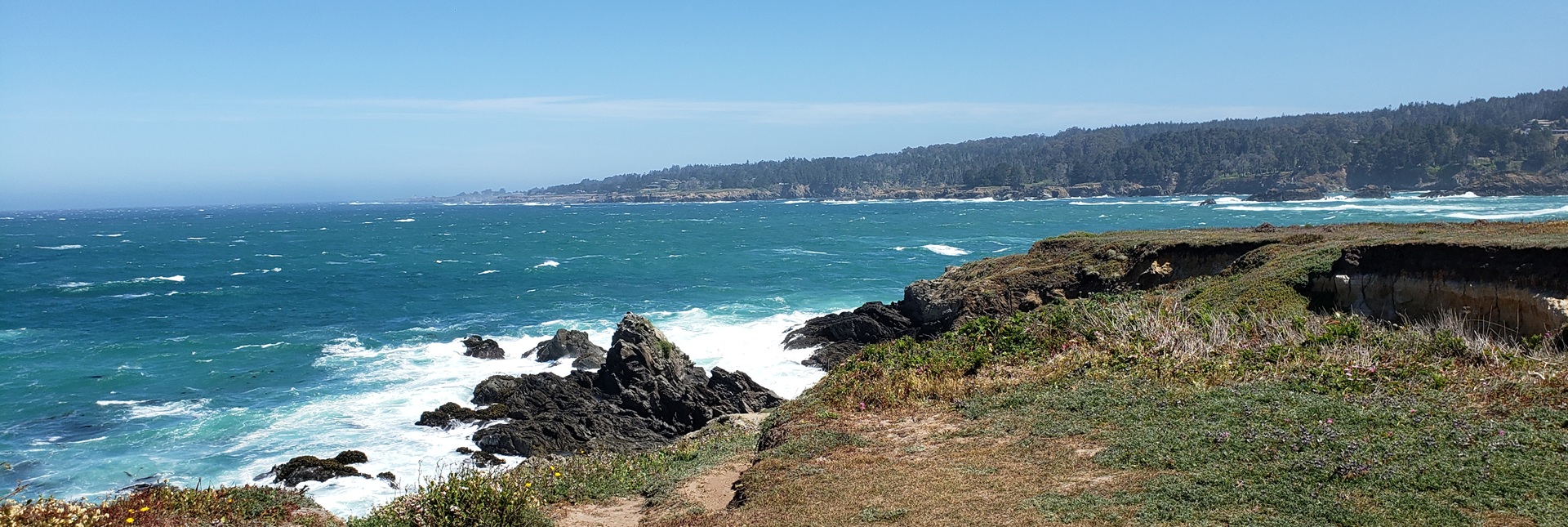
State Parks has operated San Onofre State Beach since 1971, under a lease agreement with the Department of the Navy. The park’s history as a military site — and its association with the nearby nuclear power plant, which was built in 1968 and shut down in 2013 — has preserved San Onofre in a state of relative seclusion and remoteness compared to most Southern California beaches. San Mateo Creek, for example, which feeds the Trestles Wetlands Natural Preserve, with its rich bird- and wildlife, is one of the last natural creeks in Southern California. The park has largely escaped the sprawling development and bustling freeway traffic that characterizes much of the Los Angeles and San Diego areas, said State Park Interpreter I Cryssie Moreno, adding: “San Onofre offers a glimpse of how Southern California’s coastline looked like hundreds of years ago.”
The San Mateo watershed deposited a massive cobblestone reef over millions of years, creating the proper bottom contours necessary for the consistent shape of the breaking waves. The high-performance quality of the waves has made Lower Trestles the premier North American site for international surfing competitions with a world-wide audience.
While Trestles attracts professional and competitive surfers, cars usually line up for entry to Surf Beach, whose more mellow waves are perfect for beginners. At spots like Old Man’s, whose palm trees give it an almost Hawaii-like feeling, there’s a palpable sense of the decades-old surfer culture and sense of community. Park volunteers Rick and Emily Robertson, who came from Arkansas and decided to stay at San Onofre, like that the park allows you “to step back in time” and enjoy its “calm, chill” vibe.
‘San Onofre offers a glimpse of howSouthern California’s coastline looked like hundreds of years ago.‘State Park Interpreter I Cryssie Moreno
Like much of California’s coastline, San Onofre is also a vulnerable environment, threatened by both natural and human-made forces. At the park’s southern end, the bluffs overlooking the ocean offer some of the park’s most stunningly beautiful views. The sedimentary rock formations were deposited 20 million years ago from ancient seafloors and have ever since been in a battle against erosion from wind and sea. Human development, for example the railroad construction along the beach, has accelerated this process, said Moreno, as does sea level rise, caused by a warming ocean.
Moreno, who served as the department’s sea level rise coordinator, emphasized the essential work that State Parks is doing to preserve this gem, for example by strengthening dunes through revegetation projects and looking toward nature-based solutions. Volunteers with the non-profit San Onofre Parks Foundation, Surfrider Foundation and tribal partners work with State Parks on beach access and cleanups, dune restoration, educational panels and community involvement in the future of San Onofre State Beach.
San Onofre took center stage last April, when it was chosen as the site of the 2028 LA Olympic’s surfing competition. “This global spotlight, paired with our renewed 25-year lease, ensures that future generations will continue to enjoy this California treasure,” said Acting Orange Coast District Superintendent Scott Kibbey, emphasizing the importance of San Onofre’s deeper history. Tribal voices are included in planning and interpretation efforts, honoring San Onofre’s enduring connections as the park opens a new chapter and takes the opportunity to showcase its unique natural beauty and history on the world stage.