
This Veterans Day Visit State Parks That Memorialize Military Heritage in California
The nation celebrates Veterans Day in honor of veterans of the U.S. Armed Forces each year on Nov. 11, the anniversary of the armistice that ended hostilities in World War I. California has many places with significant military connections from historic battlefields to frontier outposts to Civil War through Vietnam War military bases to Cold War installations. Here are a few of the sites that help preserve and tell that complex history in California State Parks.
Admiral William Standley State Recreation Area
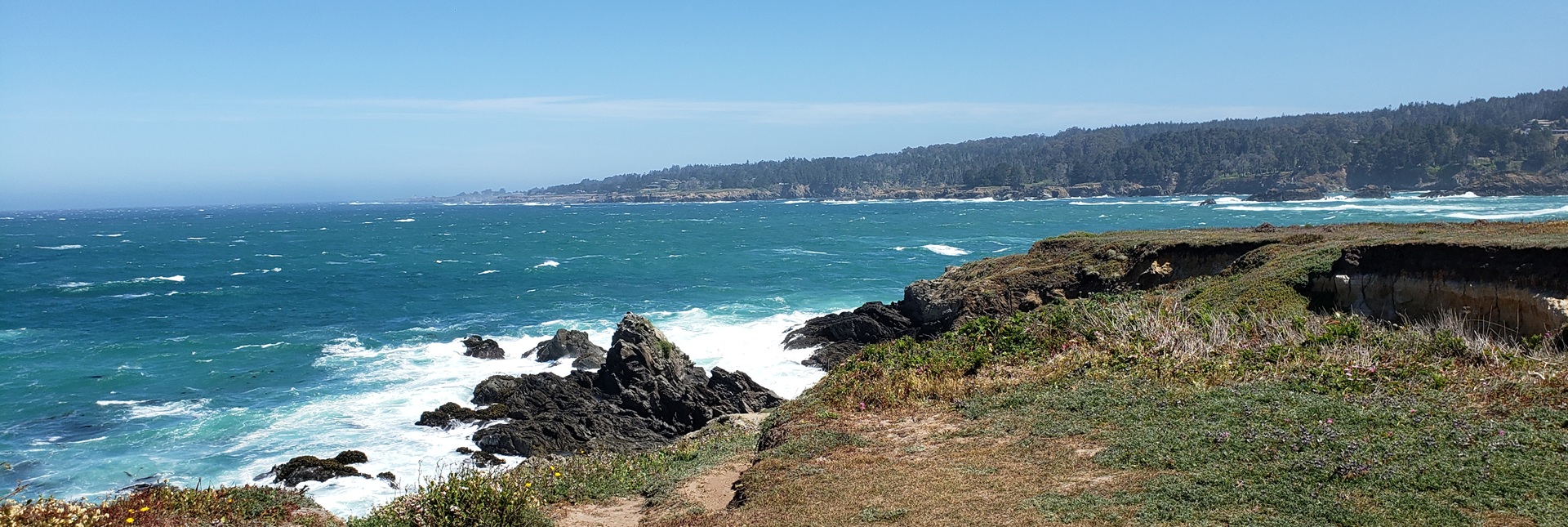
This California state park in Mendocino County is named after a distinguished officer whose career spanned the first half of the 20th century and who served in far-flung locales from the Philippines to the Soviet Union. William Harrison Standley graduated from the Naval Academy in 1895. From 1933 to 1937, he served as chief of naval operations, during a time of global tensions leading to World War II. During the war, he served as American ambassador to the USSR, then a U.S. ally. Admiral Standley was born in Ukiah, about 20 miles from the state recreation area that was established and named after him.
Its strategic location at the mouth of the San Francisco Bay made Angel Island a sought-after location for the U.S Army in the 19th and 20th centuries. Camp Reynolds (later West Garrison) was established in 1863, during the Civil War, to protect California from a Confederate attack that never materialized. It later served as a staging area for troops deployed to suppress Native American resistance to forced removals. The highest-ranking Black officer in the U.S. Army at the time of his retirement in 1906 was Lieutenant Colonel Allen Allensworth. He was stationed here as chaplain for the 24th infantry here in the late 1890s. He’s also the namesake for Colonel Allensworth State Historic Park (see entry below). Fort McDowell, also known as East Garrison, served as an embarkment point for soldiers fighting in the Pacific during World War II. The Army abandoned the island in 1946 but returned during the Cold War to install Nike missile sites on the island. Visitors today can still see the traces of the Army’s presence across the island while enjoying the park’s spectacular views in all directions.
Colonel Allensworth State Historic Park
Colonel Allen Allensworth is one of the veterans that have special significance for California State Parks. He escaped enslavement during the Civil War, joined the Union Navy, and was later honorably discharged as chief petty officer. In 1886, with a doctorate in Theology, Allensworth became chaplain to the 24th Infantry, one of the Army’s four African American regiments, and was stationed for a several years on Angel Island in the San Francisco Bay (see entry above). He retired as a lieutenant colonel in 1906 — the first Black American to attain such high rank. He and other Black pioneers formed the California Colony and Home Promotion Association in 1908 and purchased 800 acres along the Santa Fe rail line in the southern San Joaquin Valley. They established the Black town site of Allensworth to attain economic self-sufficiency, dignity, and the opportunity to create their own institutions and governance, as well as a retirement place for Black veterans. Advocacy during the late 1960s resulted in the historic site becoming a California state historic park by 1974.
El Presidio de Santa Bárbara State Historic Park
The U.S Army is not the only military that left a legacy in California state parks. Starting in 1769, the Spanish established three military fortresses, or presidios, along California’s coast in San Diego, Monterey and San Francisco. In 1782, they established the fourth one, El Presidio de Santa Bárbara, between the Santa Ynez mountains and the sea. El Presidio de Santa Bárbara State Historic Park preserves and interprets the remainder of the original 1782 Presidio, including the soldiers’ quarters, El Cuartel — California’s second oldest building. The park tells the story of California’s Spanish soldiers who protected the missions and Spanish settlers, provided a seat of government, and guarded the country against foreign invasion. While the Chumash people provided the necessary skill and labor to build the presidio they also sustained their cultural traditions through immeasurable hardships brought by Spanish colonization. The rich history of the Chumash shows their resilience in traditions that survive today, and park celebrates all the diverse cultures represented in this place.
Fort Humboldt State Historic Park
This remote military post was established in 1853 and later became the headquarters for the Humboldt Military District in the far northern part of California. It is situated on a bluff overlooking Humboldt Bay, on the ancestral lands of the Wiyot people. Today, only the hospital building remains of the original 14 structures. One of the soldiers stationed in the isolated fort as a young man was Ulysses S. Grant, the later Union general and U.S. president. While the park gives visitors a glimpse of the life of officers and military families in mid-19th century California, a historical museum is dedicated to telling the story of the fort and the Native American groups, including the Wiyot, Hoopa and Yurok, for whom the fort is associated with memories of traumatic violence and displacement in the post-Gold Rush period.
This major Army installation on the Monterey Coast was purchased in 1917 for the purpose of drilling cavalry and field artillery units. During World War II, the Korean War and the Vietnam War, Fort Ord became a key troop processing and training center. When president Truman signed Executive Order 9981, directing the desegregation of U.S. Armed Forces, in 1948, Fort Ord became known as the “first racially integrated base in the nation.”
More than a million soldiers trained at Fort Ord between 1940 and 1973, including some of the first female combat troops. Fort Ord’s dunes comprised numerous firing ranges that formed an essential part of the Army training and combat readiness. When Fort Ord was decommissioned in 1994, coastal dune habitat restoration began. The Army removed 162,800 yards of lead-contaminated soil, and 719,000 pounds of spent ammunition were recovered. Fort Ord became a state park in 2009, and is a popular place for walking and bicycling today.
Fort Tejon State Historic Park
Fort Tejon, at an elevation of over 3,500 feet, is situated in the rugged Tehachapi Mountains near Tejon Pass on Interstate 5. Between 1854 and 1864, this U.S. Army fort was initially founded to protect California Native Americans against the abuses of American miners and settlers. Tragically, during the Civil War, several hundred Owens Valley Paiute were forcibly removed to Fort Tejon, where many of them died from disease and starvation. In 1859, the fort was also the site of a failed, short-lived experiment to introduce camels for transport in the arid environment. The place is listed on the National Register of Historic Places and is a California Historical Landmark with its restored adobe buildings and beautiful mountainous landscape.
San Pasqual Battlefield State Historic Park
This park is designed not as monument to a war, but as a place of reflection of the human ideals, actions and passions that can drive nations to bloodshed. The 50-acre California Historical Landmark site north of San Diego commemorates both the Kumeyaay people who have lived on this land since time immemorial, and the American and Mexican soldiers who fought the bloodiest military engagement in California during the Mexican American War. The battle, on Dec. 6, 1846, was fought between United States troops and the Californio-Mexican forces under the command of Andrés Pico, the brother of Pío Pico, who was the last Mexican governor of California and whose former home is now a state historic park.